Research Activities

Wearable robots for contextualized human assistance & human-in-the-loop paradigm

My research activities are focused on the control of wearable robots for contextualized human assistance within a human-in-the-loop paradigm. The use cases studied concern mainly the subjects suffering from motor and/or cognitive impairments. The originality of these research activities lies particularly in the adaptation of the assistance according to the subject’s context (intention, activity, physical and cognitive state, etc.). My research activities can be categorized in two topics:

Research Topic I

I. Wearable Robotic Systems

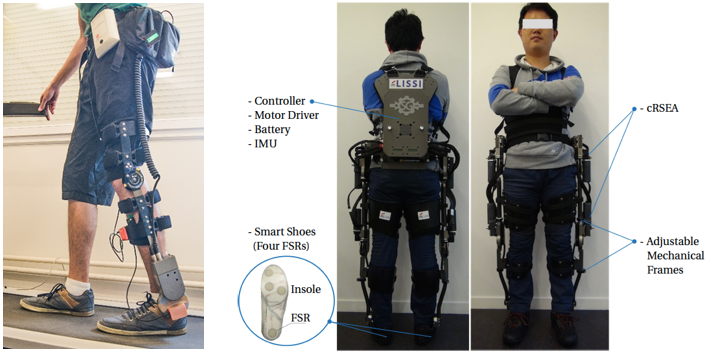
I. Wearable Robotic Systems: The first topic focuses on wearable robotic systems or exoskeletons, which can be used either as mobility support devices to improve the motor capabilities of a subjects during the performance of daily life activities or as neuromotor rehabilitation devices of paretic subjects. The key research activities addressed concern mainly the development, modeling and control of such wearable robots by tackling important scientific challenges such as taking into account the complexity of the human locomotor system, estimating the subject’s movement intention, maximizing the exoskeleton’s transparency while guaranteeing the subject’s safety and preserving as much as possible the natural movements of the subject.
Wearable Robots & Exoskeletons Mobility Support & Neuromotor Rehabilitation Human Locomotor System Modeling Intention Estimation & Transparency Control
Wearable Robotic Systems, Exoskeleton Controller, Motor Driver, Smart Shoes and Mechanical Frames
Wearable robotic platform: controller, motor driver, cRSEA actuation, smart shoes with FSRs, and adjustable mechanical frames
Research Topic II

II. Activity Analysis and Context Recognition

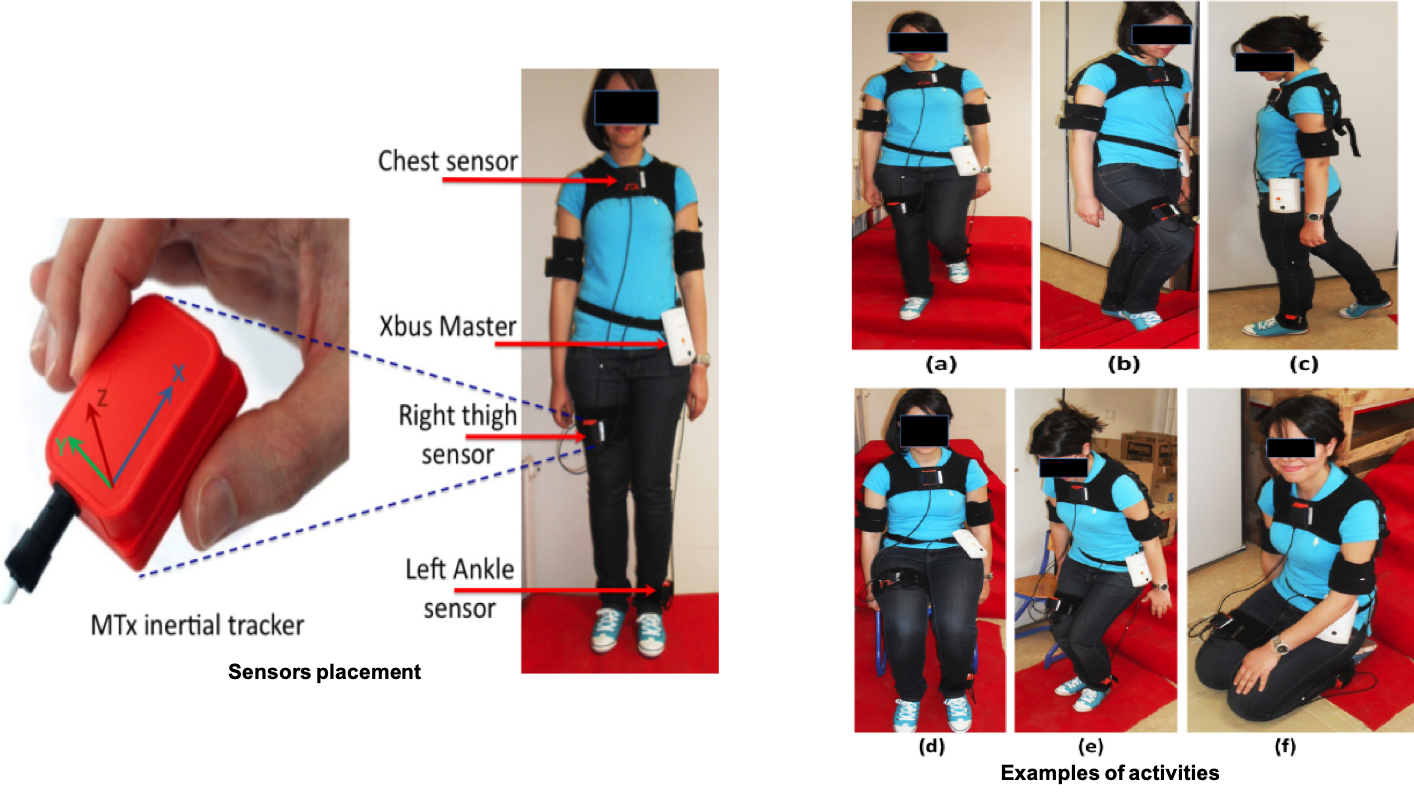
II. Activity Analysis and Context Recognition: The second topic deals with the analysis of human activities and recognition of the human context. In particular this part concerns the analysis of human physical activities, in terms of movement analysis in the context of diagnosis and monitoring of Parkinson’s disease; postural balance analysis and gait cycle analysis.

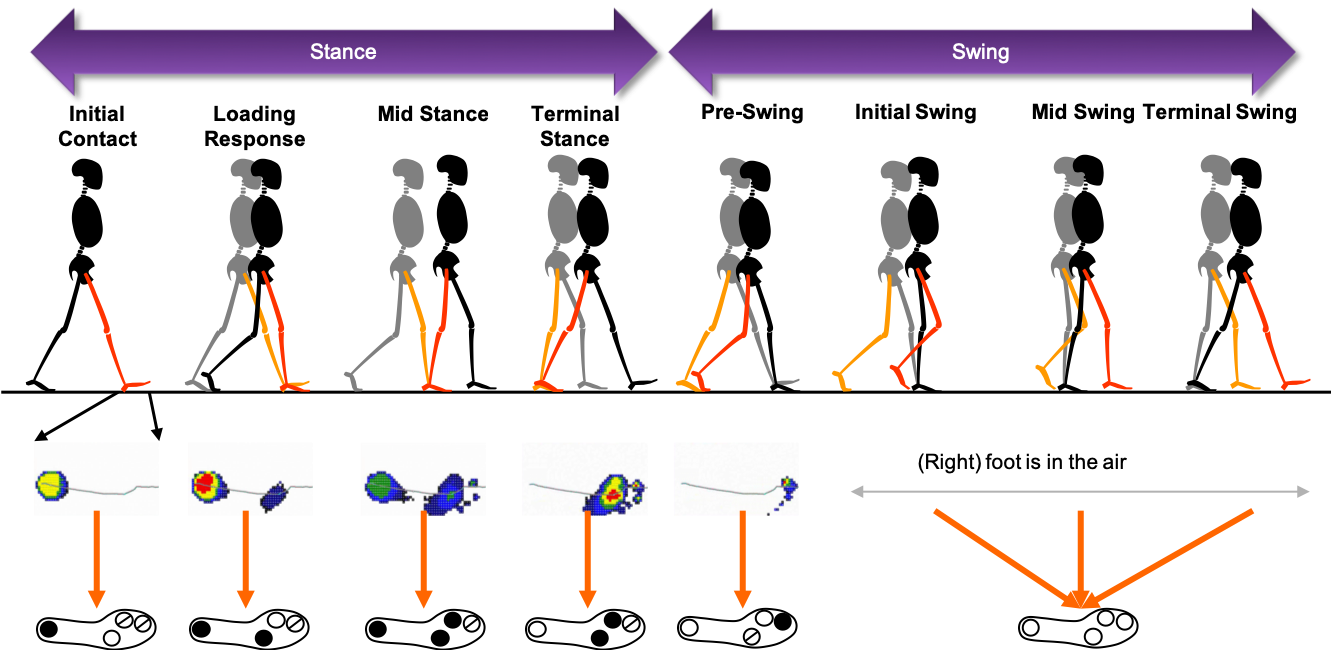
Activity Analysis & Context Recognition Parkinson’s Disease Diagnosis & Monitoring Postural Balance & Movement Analysis Gait Cycle & Plantar Pressure Analysis
Sensors Placement and Examples of Physical Activities
Sensors placement (MTx inertial tracker, Xbus Master, chest, thigh and ankle sensors) and examples of daily physical activities
Gait Cycle Phases (Stance and Swing) and Foot Pressure Distribution
Gait cycle analysis: Stance phase (Initial Contact, Loading Response, Mid Stance, Terminal Stance, Pre-Swing) & Swing phase with plantar pressure mapping